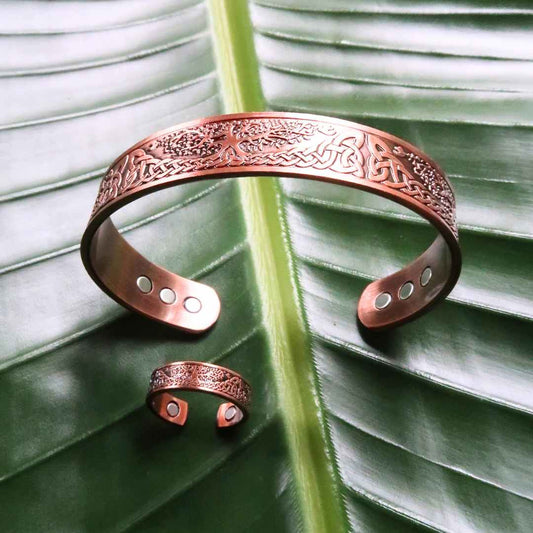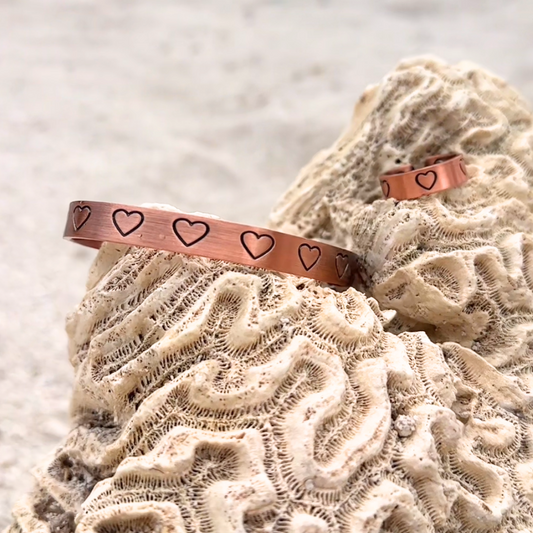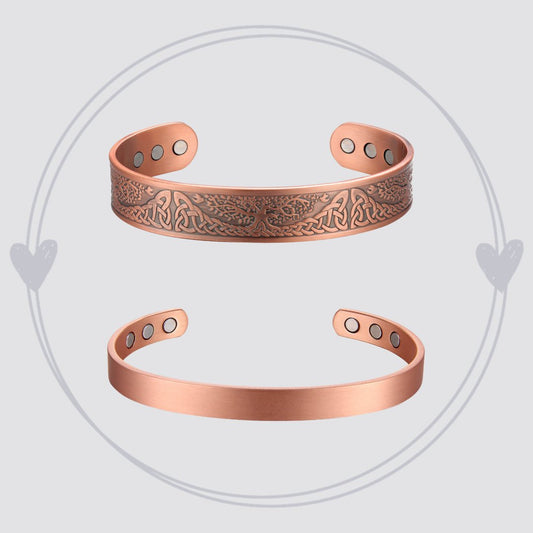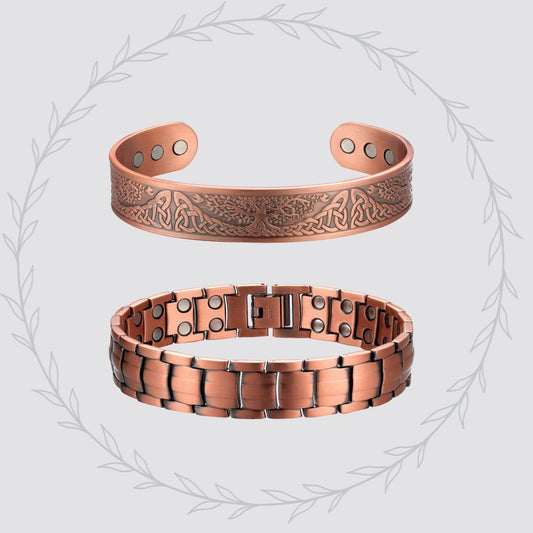

Pure copper bracelets have been worn across cultures for centuries as everyday pieces people kept close, often tied to beliefs about copper’s cleansing properties and its ability to carry and conduct energy through the body. Copper is one of the earliest metals humans worked with, which helped it become both practical and deeply symbolic, the kind of material that shows up in daily rituals, sacred objects, and personal adornment. [1] [2]
Copper Jewellery and Symbolic Wear
Long before “jewellery” meant styling, metals were worn for meaning. Across ancient cultures, copper appears in personal items that weren’t just decorative but protective and symbolic, including amulets and objects worn close as spiritual companions. [3] [4] Copper’s warm colour, natural weight, and the way it changes over time gave it a sense of aliveness, which made it feel fitting for pieces associated with intention, protection, and personal strength.
You also see copper woven into the bigger human timeline in a way few materials are. It’s often described as the first metal humans used and shaped, and it became so central to development that entire periods are named around its rise. [1] [2] When a material becomes part of how people build, store water, worship, and adorn the body, it isn’t “just metal” anymore. It becomes cultural memory.
Copper Vessels and Purification
One of the clearest clues to copper’s spiritual importance is that it appears in the home and the temple, not only on the body. In Hindu traditions, the kalasha is a sacred vessel used in ritual, often filled with water and placed as an auspicious symbol during ceremonies and offerings. It’s commonly made from metals, including copper, and the vessel itself is treated as meaningful, not merely functional. [5]
This is where the themes of purification and energetic charge come in. Copper vessels are traditionally associated with keeping water pure, spiritually strong, and suitable for worship, which is why copper has remained a preferred material in so many ritual settings. [6] The idea is simple but powerful: what holds your water also holds your intention.
Copper as a Conductor of Energy
Across holistic and spiritual traditions, copper is often spoken about as a conductor, not just of heat or electricity, but of subtle energy. You’ll hear copper described as supportive of prana, the life force, and the energetic field around the body, which is one reason it is used in sacred forms like yantras, ritual items, and temple elements. [6] In that worldview, wearing copper as a bracelet is about keeping that conductive, balancing influence close, like a steady companion you carry through the day.
Ayurvedic tradition also carries a long relationship with copper, including the practice of storing water in copper vessels, often referred to as Tamra Jal. This is commonly described as a daily wellness ritual connected to balance, clarity, and body purification, with the copper vessel viewed as part of the practice's energetic and elemental support. [7]
How to Wear Copper with Intention
If you’re wearing a pure copper bracelet in a traditional way, the main idea is consistency and intention. Wear it often, let it warm to your skin, and allow it to change, because that slow patina is part of the relationship. A copper bracelet can be a small daily ritual, something grounding you return to, especially if you like the feeling of natural materials that carry warmth, history, and energetic presence. You can treat it as an anchor, a quiet reminder of steadiness, protection, and flow, the kind of simple object that becomes meaningful because it stays with you.
References
-
Encyclopaedia Britannica Editors. (2025, December 23). Copper. Encyclopaedia Britannica.
-
Scott, D. (2014). Copper. In Around the World in 18 Elements (Vol. 18, pp. 76–85). Royal Society of Chemistry. https://doi.org/10.1039/BK9781849738040-00076
-
Stünkel, I. (2019, February 1). Ancient Egyptian Amulets. The Metropolitan Museum of Art (Heilbrunn Timeline of Art History).
-
Victoria and Albert Museum. (n.d.). A history of jewellery. Victoria and Albert Museum.
-
Wikipedia contributors. (2025, June 11). Kalasha. Wikipedia.
-
The Times of India. (2025, October 15). Why copper is considered a divine metal. Times of India.
-
Saha, S. (2025, July 21). Why Drinking Copper-Infused Water Every Morning May Benefit Your Health. NDTV Food.
Pure Copper Bracelets Frequently Asked Questions
What is a pure copper bracelet?
A pure copper bracelet is made from solid copper rather than mixed metals. It naturally ages over time, developing patina that reflects daily wear.
Why were copper bracelets worn traditionally?
Copper bracelets were traditionally worn as simple everyday pieces kept close to the skin. In many cultures, wearing copper was part of daily ritual, linked to steadiness, protection, and wellbeing.
Does it matter which wrist a copper bracelet is worn on?
Not usually. Traditional wrist choice varied by culture, symbolism, and personal comfort, and many people simply wore it on the wrist that fit best into daily life.
Do pure copper bracelets change over time?
Yes. Pure copper naturally darkens and develops patina with air, moisture, and wear. This change is normal and often seen as part of the bracelet’s character.
Can copper bracelets be worn every day?
Yes. Many people wear copper bracelets daily as part of their routine or ritual, removing them only when needed for water, work, or comfort.