



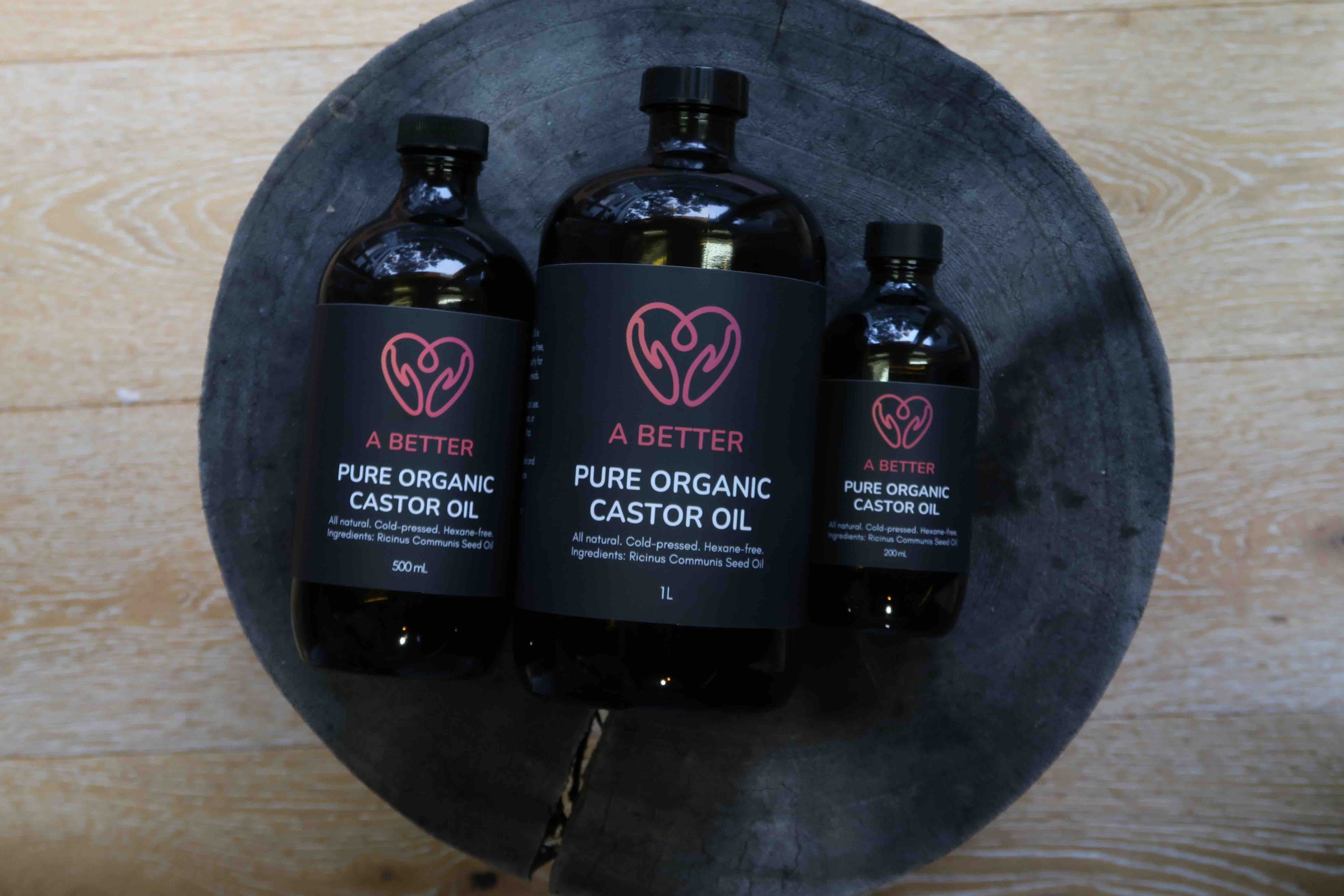
Castor oil is a rich, thick oil used in everyday routines for skin, hair, and on the face. It’s also popular for at-home castor oil packs.
Here’s what it is, how people use it, and how to choose a high-quality oil.
Castor Oil Benefits for Skin, Hair & Face
What is castor oil?
Castor oil is a natural plant oil made from the seeds of the castor plant (Ricinus communis). It’s known for its thick texture and is commonly used in skincare, hair care, massage, and traditional external self-care routines.
Naturally rich in ricinoleic acid, castor oil is widely known for its soothing, anti-inflammatory feel when used topically. Many people reach for it on dry or irritated-feeling skin, or blend it with lighter oils for massage to support relaxation and recovery.
It’s also popular for castor oil wrapping, a wellness ritual in which natural fabric is used to apply castor oil to targeted areas of your body. Using Castor Packs is often described as grounding and comforting, especially when you’re feeling inflamed or run-down.

How to use: Castor oil for skin
Castor oil is a popular choice for deep moisturising, especially when skin feels dry or reactive. Known for its soothing, anti-inflammatory feel when used topically, some people apply it to irritated areas, minor rashes, or patchy dryness to calm the look of redness and discomfort. Castor oil is also used in massage for sore muscles and areas of swelling, where gentle application may support circulation and recovery.
Common ways people use it
- As a body moisturiser for rough patches like heels, elbows, and hands
- Massaged into areas that feel swollen or sore
- As part of a relaxing massage or evening wind-down routine
Step-by-step: relaxing massage
- Start with clean, slightly damp skin (after showering is ideal).
- Warm a few drops between your palms.
- Apply to the area and massage gently using slow, circular movements.
- Use sparingly; a little goes a long way.
- Let it absorb for a few minutes before dressing.
Step-by-step: targeted dry or sore areas
- Apply a small amount to the area.
- Massage for 30–60 seconds.
- For overnight care: apply, then use socks/gloves, or place a towel over the sheets to protect them.
Tip: Prefer a lighter feel? Many people blend castor oil with jojoba or frankincense. For convenience, our pre-blended options are ready to use.

How to use: Castor oil for face
Castor oil can be a beautiful face oil when applied thinly. Naturally rich in fatty acids and vitamin E (tocopherols), it is often used to help soften the look of fine lines by sealing in moisture and supporting a healthy-looking glow.
- A thin layer as a final step at night (in place of a night cream)
- Gentle face massage with gua sha
- Mixed with a lighter oil for easier spread and added benefits
Step-by-step: simple night routine (with roll-on)
- Cleanse, then apply toner or mist so skin is slightly damp.
- Roll a thin layer over cheeks, forehead, jaw, and under the eyes.
- Massage in with fingertips.
- If it feels too rich, use less next time or mix with a lighter oil.
Step-by-step: face massage (with gua sha)
- Apply a thin layer of castor oil or face oil, so the tool glides easily.
- Hold the tool at a low angle (almost flat to the skin, not upright).
- Start with the neck: glide downward on the sides of the neck 3–5 times (gentle pressure).
- Jawline: Place the gua sha at the centre of the chin and glide out toward the ear 5 times per side.
- Cheeks: start beside the nose and sweep out toward the ear 5 times per side.
- Under-eye (very light): glide from the inner corner outward toward the temple 3 times per side (feather-light).
- Forehead: glide from brows upward to the hairline, then from the centre outward toward the temples (3–5 strokes each).
- Finish by sweeping from the centre of the face outward once more, then take a few deep breaths.
- Wipe any excess oil if needed, and clean your gua sha with warm water + gentle soap.
Tip: A castor oil roller is an easy way to control how much you apply. After using it, wipe the excess off the top of the ball with a tissue to keep it clean and dry.

How to use: Castor oil for hair
Castor oil is a staple in natural hair rituals because it’s deeply moisturising and helps hair feel softer, smoother, and more protected from dryness. It’s also widely used in “hair growth” routines. Many people believe its signature fatty acid (ricinoleic acid) and consistent scalp massage can help stimulate hair follicles and support the look of thicker, stronger, healthier-looking hair over time.
Common ways people use it
- Works well for scalp massage before washing
- As a nighttime deep moisture treatment
- Often blended with lighter oils for easier application
Step-by-step: scalp massage before washing (beginner-friendly)
- Start with dry hair before a wash day.
- Apply a small amount of castor oil or hair oil to the scalp and roots, then massage in gently.
- Smooth any remaining oil down the mid-lengths and ends, focusing on dry or damaged areas.
- Cover with a cap or hair wrap and leave for 30–60 minutes, or for a more intense moisturising treatment, leave in overnight and wash out in the morning.
- Shampoo thoroughly and condition as usual.
- Start once weekly for 3–4 weeks, then adjust based on how your scalp and hair respond.
Step-by-step: hair ends + shine routine
- Warm 1–2 drops in palms.
- Smooth through mid-lengths and ends (avoid roots if you get oily easily).
- Leave for 30 minutes, then wash out.
Tip: If it feels too heavy, use a pre-blended hair oil that has been diluted with jojoba and rosemary oils for added benefits.

How to use: Castor oil for eyelashes and brows
Castor oil is a favourite in natural beauty routines for lashes and brows because it’s deeply conditioning and helps protect delicate hairs from dryness and breakage. Many people use it to support the look of fuller brows and longer-looking lashes over time, especially if you’re dealing with sparse patches, over-plucking, or brittle lashes.
For easy, controlled application, a roller is one of the simplest options, especially in smaller sizes like 10mL (handbag/travel) or 50mL (at-home daily use).
Step-by-step: brows (roller)
- Start with clean, dry brows (remove makeup and skincare first).
- Using the castor oil roller, do a light pass through each brow from the inner to the outer corner.
- Use a fingertip or clean cotton bud to gently distribute the oil evenly, especially through sparse areas.
- Let it absorb for a minute before applying other products or going to bed.
Tip: One pass is usually enough — if it feels heavy, use less next time.
Step-by-step: eyelashes (roller)
- Start with a clean eye area (no mascara or eyeliner).
- With the roller, apply the tiniest amount along the lash line and lashes
- Use your fingertip or cotton bud to spread evenly and prevent excess product.
- Let it settle before bed.
If you’re sensitive: Use less, keep the application lighter, and pause if your eyes feel irritated or watery.
Results expectation: Like most natural routines, consistency matters. Many people assess their brows and lashes over 4–8 weeks of regular use.

How to use: Castor oil packs
Castor oil packs (sometimes called a castor oil compress or castor oil wrap) are a classic wellness ritual in which castor oil is applied to a piece of natural fabric and placed on the body during rest time. People love castor oil packs because they can feel deeply soothing and grounding, especially when the body feels tense, inflamed, or run-down. Many people use them to help soothe sore muscles or achy joints, and they’re also popular over the lower abdomen as a comforting ritual during indigestion, period pain, or endometriosis-related discomfort. In holistic wellness, packs are also often used as a gentle “liver support” or detox-style practice.
Step-by-step: simple castor oil pack routine
- Apply about 1 tablespoon of castor oil to the wrap or cotton pad.
- Smooth it in with the back of a spoon (or wait 10 minutes for the oil to absorb).
- Place it on the desired area (often the abdomen or joints).
- Secure the wrap and add a heat pack if desired.
- Relax for 30–60 minutes.
- Remove and wipe off excess oil with a warm cloth.
- Store or wash the wrap as directed.
A purpose-made castor oil wrap helps keep it comfortable and far less messy, especially if you’re doing castor oil packs regularly at home.

Choosing a quality castor oil
If you’re looking for the best organic castor oil in Australia, these are the quality markers to look for:
- Cold-pressed castor oil
- Hexane-free castor oil
- Pure castor oil (100% castor oil, no fillers)
- Organic castor oil
- Bottled in dark glass (helps protect quality)
Why it matters? Because castor oil is often used directly on the skin, scalp, lashes/brows, and in packs where it absorbs into the skin, quality matters.
Mass-market castor oils are often produced to hit a price point, which can mean solvent extraction, heavier refining, and plastic packaging.
Here at A Better, our Organic Castor Oil is sourced from India via an ACO-certified Australian supplier. It’s 100% pure, organic, hexane-free, cold-pressed, and bottled in amber glass.

What to buy first
If you’re new to castor oil, these are the simplest starting points:
1) Castor Oil Roller (recommended for skincare routines)
Great for skincare routines and controlled application (also handy for targeted dry patches).
2) 50mL Pure Organic Castor Oil with dropper
The easiest first bottle to try on skin, hair, and face without overcommitting.
3) Starter Pack (recommended for packs)
If you want to try castor oil packs straight away, this is the most comfortable way to start.
-
Pure Organic Castor Oil Roll-On 50mL - Amber Glass Bottle Rose Quartz Roller
Regular price $36.00Regular priceUnit price per -
 BUNDLE & SAVE
Castor Oil Starter Pack
Regular price $99.00Regular priceUnit price per$116.00Sale price $99.00BUNDLE & SAVE -
Pure Organic Castor Oil 50 mL - Amber Glass Bottle
Regular price $24.00Regular priceUnit price per
Frequently Asked Questions
Organic Castor Oil
Where is your Castor oil sourced?
- Our Organic Castor Oil is sourced from India via an ACO‑certified Australian supplier.
- It’s 100% pure, organic, hexane‑free, cold‑pressed, and bottled in amber glass, with rigorous testing and documentation.
Is your Castor Oil organic and hexane-free?
- Yes, certified-organic supply chain and hexane-free.
- No additives, fragrances, or preservatives.
Plastic or glass bottles?
- We only use amber glass bottles.
- Amber glass protects the oil from light exposure and preserve its quality.
- Our Roll-on bottles are also real amber glass.
Is it cold-pressed/extra virgin?
- Yes, our Castor oil is cold-pressed.
- While 'extra virgin' is typically used for olive oil, meaning unprocessed and cold-pressed, our Pure Castor Oil meets those criteria as well.
How do I refill my Rose Quartz Roller Bottle?
Refilling your roller is easy. Watch this quick video. This method works for all our Rose Quartz rollers with coloured lids.
If you have a black lid on your rose quartz roller, watch this video instead.
What sizes do you offer?
- 50 mL, 200 mL, 500 mL, and 1 L bottles.
- As well as our Roll-ons in 50 mL and 10 mL sizes. See all sizes here.
What is the expiry date?
- Current batch expiry date: January 2027.
- Store tightly sealed, in a cool, dark place.
- Our Castor oil is pale yellow, and has a mild, nutty scent. Discard if brown/cloudy or if you notice a rancid smell.
Can I refrigerate castor oil?
- Refrigeration isn’t necessary. Store tightly sealed in a cool, dark place.
- Best storage temperature: around 15–25°C (room temperature). Cold conditions will thicken castor oil, which can slow absorption; let it return to room temp before use.
What are the benefits of using Castor oil?
- Key benefits: hydrates dry skin, supports scalp and hair health, and offers soothing comfort when used with wraps over targeted areas.
- It’s rich in ricinoleic acid and natural vitamin E, and is traditionally used for relaxation and wellness routines.
Will Castor oil help with pain and inflammation?
- Castor oil is commonly used for soothing comfort on sore muscles and joints, especially when paired with a castor oil wrap and gentle heat.
- Many people also report relief for period pain and endometriosis-related discomfort.
- Timelines: mild issues (stomach or period pain) may ease within 1–3 days; longer‑standing concerns often need consistent wraps over a few weeks.
What can I use Castor oil for?
Castor oil uses (topical)
- Comfort and relief
Sore joints and muscles: Massage a small amount directly into the ares, or use a castor oil wrap and gentle heat for 30–60 minutes.
Period pain and abdominal discomfort: Apply a waist wrap over the lower abdomen.
Bowel discomfort/bloating: Use a waist wrap over the waist/liver area.
- Wellness routines
Liver area (waist) wraps: Commonly used 3–5 times per week for relaxation and routine wellness.
Thyroid/neck area: Massage directly onto area or use a neck wrap as preferred.
- Skin care
Body moisturiser: Apply a thin layer on damp skin; a little goes a long way.
Face moisturiser: Apply a small amount on damp skin, or use our Castor Oil Roll‑On to glide on a thin layer.
Problem‑prone or itchy skin: Many people use it to calm dryness and support the skin barrier.
Dry skin and rough patches: Massage on heels, elbows, cuticles.
Appearance of scars: Massage into the area regularly.
- Hair and brows/lashes
Scalp and hair: Massage into roots, leave 30–60 minutes or overnight, then shampoo.
Brows and lashes: Apply a small amount at night directly to the area.
Can I use castor oil on my face?
- Yes, our castor oil can be used as a daily face moisturiser.
- Apply a small amount on damp skin, or use our Castor Oil Roll‑On to glide on a thin layer.
- It’s rich in fatty acids and natural vitamin E, supporting the skin barrier with antioxidant protection.
- Many people use it to help soften the look of fine lines and support skin elasticity. It can also help reduce puffiness, as it promotes surface circulation.
Will castor oil give me facial hair?
- No, Castor oil won’t make hair grow where it doesn’t naturally grow. Facial hair growth is driven by hormones, not topical oils.
- Castor oil simply nourishes existing hair and the surrounding skin. It can help brows and lashes look fuller where follicles already exist, but it won’t create new hair in areas without active follicles.
Can I use castor oil on eyelashes and eyebrows?
- Yes, dab a small amount onto your eyelashes and/or eyebrows nightly.
Can I use Castor oil on my eyelids?
- Many people use castor oil around the eye area at night. Apply a thin layer to the eyelids/under‑eyes, and allow it to absorb overnight.
- Some people with dry‑eye or blepharitis concerns choose to apply a small amount of castor oil to the eyelids at night.
How do I use Castor oil for detox?
- Many people use a castor oil waist wrap over the liver area (right side under the rib cage) for 30–60 minutes, 2–4 times per week, then pause, and repeat monthly if desired.
- Start gently (shorter sessions, less oil) and see how you feel; increase as comfortable.
- This routine is traditionally used for relaxation and wellness. Some people report it helps them feel lighter and more comfortable in the abdominal area.
- Do not use while pregnant or breastfeeding. Consult your naturopath for further advice.
Is castor oil good for hair growth?
- Yes, Castor oil is commonly used to support hair/scalp health.
- How to use: Massage a small amount into the scalp, leave for 30–60 minutes or overnight, then shampoo out.
- See the full method in our hair growth guide here.
What's the best way to remove Castor oil from hair?
Massage shampoo into oiled hair, then rinse and shampoo again if needed.
Can I use Castor oil for acne or eczema? Will it clog pores?
- Castor oil has a very low comedogenic rating and is unlikely to clog pores for most skin types.
- Many people use castor oil to help calm acne‑prone or eczema‑prone skin thanks to its soothing, barrier‑supporting properties.
- Tips: apply a thin layer on damp skin, and patch test first if you’re sensitive.
Can I mix castor oil with other oils or essential oils?
- Absolutely. Many customers add their own essential oil blends to our Castor oil for massage and relaxation.
- We have ready-to-go oil blends in our Roll Ons & Blends Collection.
Can I use Castor oil during my period?
- Yes, many people use castor oil during their period for soothing comfort. Apply a wrap over the lower abdomen, below the belly button.
- During your period: Use a waist wrap daily over your abdomen area for 30–60 minutes (or longer if comfortable). Heat can help with comfort and may help the oil absorb faster.
- Between periods: use 3–4 times per week and then take a short break to see how you feel. If comfortable, you can gradually increase time; some people wear a wrap overnight.
- Note: Some people notice an increase in menstrual flow when using during their period. If this happens, discontinue use during your period and resume between periods next cycle.
What’s the “belly button” method?
- Applying castor oil to the belly button is a Ayurvedic practice, rooted in the belief that the navel, or 'Nabhi,' is a vital focal point of the body.
- It is thought to nourish and balance the body by connecting to numerous veins and energy pathways.
Is castor oil safe during pregnancy or breastfeeding?
- Do not ingest while pregnant. Ingesting Castor oil can irritate the intestines, which can bring on labor.
- It is generally safe to use a small amount of Castor Oil externally for moisturising on the body while breastfeeding. Avoid the torso area. Consult your naturopath for further advice.
Can I ingest your castor oil?
- Our oil is sold for external use only. However, it is safe to take orally if you like. It’s 100% pure and organic.
- The recommended dosage is 15-60ml orally for constipation. Some people also take a tablespoon a week for general wellness. Just be cautious if you haven’t had it before as it can have a laxative effect.
- Do not ingest while pregnant or breastfeeding. Consult your naturopath for further advice.
What’s the difference between yellow and black castor oil?
- With Black castor oil, the beans are roasted, in yellow castor oil they are not.
- Black castor oil can be good for coarse or thick hair. For most people yellow castor oil is gentler on your hair and scalp.
Does Castor oil help with headaches?
- Castor oil isn’t a primary headache remedy, but some people find it soothing for tension headaches. Gently massage a small amount onto the temples, forehead, and neck/shoulder area to relax surface muscles.
- For a cooling sensation, add a drop of peppermint oil diluted in the oil.


